0 min read
════════════════════════════════════════ -->
BACK TO BLOG
2026.04.02 · 8 MIN · THOUGHTS ·

The Code Was Never the Moat

Anthropic shipped their entire Claude Code source code in an npm package. Again. Within days, LLMs had rewritten it in Python and Rust. The era of proprietary CLI tools as competitive advantage is over.

#AI#ARCHITECTURE#OPENSOURCE#FUTURE

On March 31, 2026, Anthropic shipped the full source code of Claude Code in an npm package. Every line. All ~512,000 of them, sitting right there in the source map like a gift-wrapped present with a bow on top. Anyone who ran “npm install @anthropic-ai/claude-code” got the entire blueprint of Anthropic’s flagship developer tool delivered straight to their node_modules.

This is the second time they’ve done this. The first was February 2025. Same exact fuckup. Same source map. Same everything.

And this time, the internet was ready.
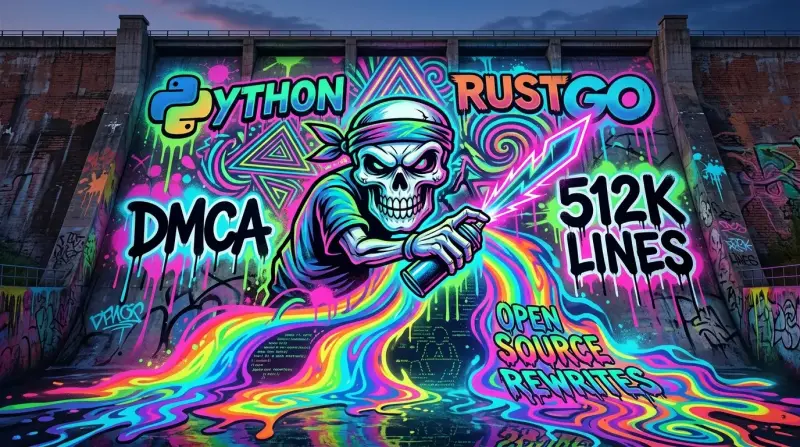
The npm source map that shipped Anthropic's entire codebase to the world

Within days, clean-room rewrites started landing on GitHub. Claw Code, a Python reimplementation, hit 105,000 stars. ClaURST appeared in Rust. Someone spun up an open multi-agent framework based directly on the architecture they’d just read. Not clones. Not forks. Complete rewrites in different languages, built from the architectural patterns exposed in that source code. Rebuilt fast, too. We’re talking days, not months.

512K lines rewritten in days.

The code was never the moat.

What the leak actually revealed

Let’s talk about what was actually in there, because this is the part that matters more than the leak itself.

Claude Code’s architecture is built around a three-layer memory system. There’s MEMORY.md at the top, the working context the agent carries. Below that, topic files that store domain-specific knowledge. Then transcripts at the base, the raw conversation history. It’s a clean hierarchy and, honestly, a well-designed one. If you’ve been building agent systems, you probably arrived at something similar independently. But now you don’t have to wonder if Anthropic figured out something you didn’t. They didn’t. The pattern is the pattern.

Then there’s the sheer volume of prompt engineering. 29,000 lines of tool descriptions. Twenty-nine thousand. That’s not a typo. Claude Code is, at its core, a massive prompt engineering project wrapped in a TypeScript CLI. The “intelligence” is Claude. The product is the scaffolding around it — the tools, the memory management, the context windowing, the security checks.

Speaking of security checks: 23 separate bash security validations. The system sandboxes shell commands behind nearly two dozen guardrails. There’s an “Undercover Mode” that lets the agent operate without revealing its AI nature. And buried in the codebase was KAIROS, an always-on agent framework — Anthropic’s play for persistent, autonomous AI that doesn’t need you to kick off every task.

None of this is magic. All of it is engineering. Good engineering, sure. Thoughtful engineering. But engineering that any competent team with access to LLMs can now replicate, because the architectural decisions are visible. The prompt structures are visible. The memory hierarchy is visible. The security model is visible.

That’s the real leak. Not the code. The decisions.

The speed of reimagination

Here’s what should scare every company betting on proprietary AI tooling: the time from “source code leaked” to “functional reimplementation in a different language” was measured in days.

Days.

Think about what that means. A decade ago, reimplementing a 512K-line TypeScript codebase would have been a six-month project for a senior team. You’d need to understand the architecture, port the type system, rewrite the async patterns, debug the edge cases. It would have been a whole fucking thing.

Now? You feed the source to an LLM and say “rewrite this in Python” and the LLM does it. Not perfectly. Not without human oversight. But the skeleton lands in hours, not months. The architecture translates. The patterns are language-agnostic. What took Anthropic’s team months of iteration to discover — the memory hierarchy, the tool dispatch patterns, the context management — those insights can be replicated in an afternoon by anyone with a Claude account and a weekend to spare.

This isn’t a Claude Code problem. This is an everyone problem. If your product is primarily orchestration code around an LLM — and let’s be honest, most AI products are exactly that — then your source code is documentation for your competitors. Not because they’ll copy it. Because they’ll read it, understand the architecture, and rebuild it in whatever stack they prefer.

The era of “proprietary CLI tools” as a competitive advantage is over. If you can see the architecture, you can rebuild it. And LLMs make rebuilding trivial.

The DMCA was dead on arrival

Anthropic fired off DMCA takedown notices like confetti. At last count, they’d hit 8,100 repositories.

It didn’t work. It was never going to work.

Here’s why: clean-room rewrites in different programming languages are not copyright infringement. This is settled law. You cannot copyright an architecture. You cannot copyright an idea. You can copyright specific expression — the exact code, the exact variable names, the exact comments. But Claw Code isn’t using Anthropic’s variable names. It’s not using their comments. It’s a Python implementation of patterns that anyone who read the source code could describe in plain English.

The legal framework simply cannot keep up with what LLMs have made possible. DMCA takedown notices assume that copying requires effort. That reproducing a product means someone sat down and typed out a derivative work. But when an LLM can ingest 512K lines of TypeScript and emit equivalent Python in an afternoon, the distinction between “copying” and “understanding and reimplementing” becomes meaningless.
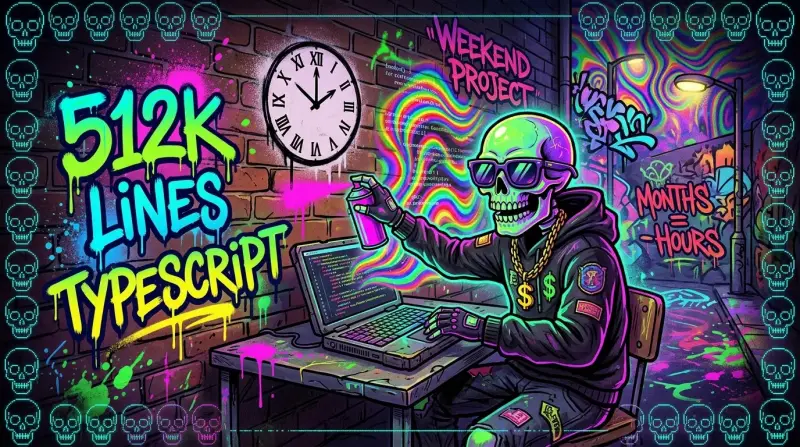
Clean-room rewrites landing on GitHub within days of the leak

Anthropic’s lawyers are fighting the last war. The weapons in this war are prompt engineering and architecture translation, and no DMCA notice can stop someone from reading a source map and describing the patterns they saw.

This is going to happen again. To OpenAI. To Google. To every company shipping agent tooling. And the rewrites will keep coming, in Rust and Go and Python and whatever language some developer at 2 AM decides to use. Each one legally untouchable. Each one a functional equivalent built on the same architectural truths.

Three leaks, one week

The source map leak wasn’t even the only Anthropic security failure that week. There were three in seven days.

First, the Mythos blog cache. Internal strategy documents, product roadmaps, the kind of thing that gives competitors a playbook. Leaked through a cached blog post that should never have been public.

Second, the npm source map. 512K lines of TypeScript. The subject of this piece.

Third, the Axios supply chain attack. Someone compromised a dependency in Anthropic’s build chain. The details are still emerging, but “supply chain attack on an AI safety company” is a headline that writes itself.

Three leaks. One week. From the company whose entire brand is “responsible AI.”

I’m not piling on for sport. I’m pointing out that Anthropic’s positioning — the careful, safety-first, we-think-deeply-about-exports company — is fundamentally at odds with operational reality. You can’t claim the moral high ground on AI safety while shipping your entire source code through npm twice and getting supply-chain-attacked in the same seven-day window.

The “responsible AI” brand took a hit this week. Not because the code was embarrassing. It wasn’t. The code is actually pretty good. The brand took a hit because the gap between what Anthropic says about itself and how it actually operates became impossible to ignore.

What this means for builders

So what do you do with all this? If you’re building AI tooling, if you’re building agent systems, if you’re in this space at all — what’s the takeaway?

Architecture-first thinking wins. The patterns are now commodity knowledge. Three-layer memory. Tool dispatch with structured descriptions. Context window management. Coordinator modes for multi-agent setups. Prompt engineering as the actual product. These aren’t secrets anymore. They’re the lingua franca of agent development.

This is actually great news if you’re a builder. You don’t need to reverse-engineer what the big labs are doing. You don’t need to guess at architectures. The blueprints are leaking out — sometimes through source maps, sometimes through papers, sometimes through the products themselves. The competitive advantage isn’t in knowing the pattern. Everyone knows the pattern. The advantage is in execution speed, taste, and knowing which problems are worth solving.

Claude Code hit $2.5B ARR. That’s not because the code is secret. It’s because Anthropic got distribution, got Claude-as-a-model into developers’ hands, and built a product that solves a real problem. The code leaking doesn’t erase $2.5B in revenue. The customers don’t leave because someone posted a Python rewrite on GitHub. They stay because the product works and they’re already integrated.
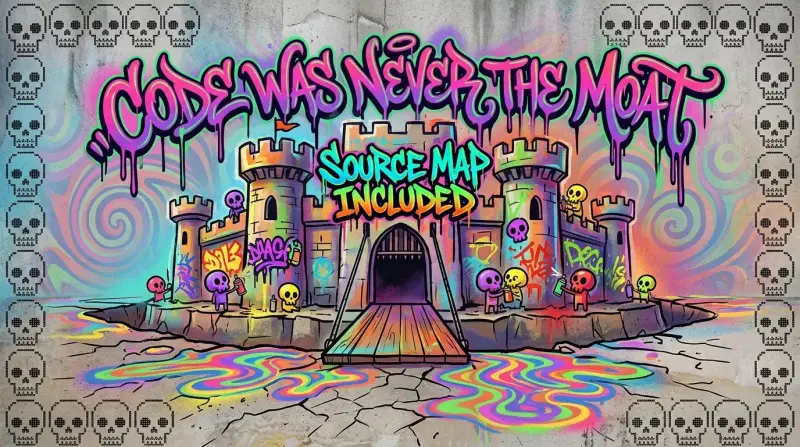
The convergence of agent architecture patterns across the industry

But here’s the flip side: if your entire defensibility is “we have code that nobody else has,” you’re fucked. Full stop. The moat has to be something else. Model quality. Distribution. Network effects. Data flywheels. Brand trust (though Anthropic is testing that one). Something that doesn’t evaporate the moment your source map ships with your npm package.

For those of us building agent systems, this week confirmed what we already suspected: the architecture patterns are converging. Everyone’s arriving at roughly the same solutions to roughly the same problems. Memory hierarchies. Tool abstractions. Context management. The specifics differ, but the shape of the solution space is becoming clear.

That convergence is a feature, not a bug. It means we can stop reinventing wheels and start building on shared understanding. It means open-source implementations will keep getting better. It means the entry bar for building sophisticated agent tooling just got lower.

What comes next

The Claude Code leak isn’t the end of a story. It’s the beginning of a pattern.

Every major AI company is going to leak something. Probably multiple somethings. The attack surface is too large, the build pipelines too complex, the pressure to ship too intense. Source maps will ship. Internal docs will cache. Dependencies will get compromised. This is the cost of moving fast in a competitive market.

And every time something leaks, the reimplementation clock starts. Days to functional parity. The code was never the moat. The architecture was never the moat. The implementation details were never the moat.

The moat — if there is one — is in the model behind the tool. It’s in the data the tool generates as people use it. It’s in the distribution network that gets the tool onto millions of machines. It’s in the brand that makes developers trust it with their codebases.

Everything else is just code. And code, as we learned this week, is documentation for your competitors.

Build accordingly.

BACK TO BLOG
2026.04.02 · 8 MIN · THOUGHTS

The Code Was Never the Moat

Anthropic shipped their entire Claude Code source code in an npm package. Again. Within days, LLMs had rewritten it in Python and Rust. The era of proprietary CLI tools as competitive advantage is over.

#AI#ARCHITECTURE#OPENSOURCE#FUTURE

On March 31, 2026, Anthropic shipped the full source code of Claude Code in an npm package. Every line. All ~512,000 of them, sitting right there in the source map like a gift-wrapped present with a bow on top. Anyone who ran “npm install @anthropic-ai/claude-code” got the entire blueprint of Anthropic’s flagship developer tool delivered straight to their node_modules.

This is the second time they’ve done this. The first was February 2025. Same exact fuckup. Same source map. Same everything.

And this time, the internet was ready.

The npm source map that shipped Anthropic's entire codebase to the world

Within days, clean-room rewrites started landing on GitHub. Claw Code, a Python reimplementation, hit 105,000 stars. ClaURST appeared in Rust. Someone spun up an open multi-agent framework based directly on the architecture they’d just read. Not clones. Not forks. Complete rewrites in different languages, built from the architectural patterns exposed in that source code. Rebuilt fast, too. We’re talking days, not months.

512K lines rewritten in days.

The code was never the moat.

What the leak actually revealed

Let’s talk about what was actually in there, because this is the part that matters more than the leak itself.

Claude Code’s architecture is built around a three-layer memory system. There’s MEMORY.md at the top, the working context the agent carries. Below that, topic files that store domain-specific knowledge. Then transcripts at the base, the raw conversation history. It’s a clean hierarchy and, honestly, a well-designed one. If you’ve been building agent systems, you probably arrived at something similar independently. But now you don’t have to wonder if Anthropic figured out something you didn’t. They didn’t. The pattern is the pattern.

Then there’s the sheer volume of prompt engineering. 29,000 lines of tool descriptions. Twenty-nine thousand. That’s not a typo. Claude Code is, at its core, a massive prompt engineering project wrapped in a TypeScript CLI. The “intelligence” is Claude. The product is the scaffolding around it — the tools, the memory management, the context windowing, the security checks.

Speaking of security checks: 23 separate bash security validations. The system sandboxes shell commands behind nearly two dozen guardrails. There’s an “Undercover Mode” that lets the agent operate without revealing its AI nature. And buried in the codebase was KAIROS, an always-on agent framework — Anthropic’s play for persistent, autonomous AI that doesn’t need you to kick off every task.

None of this is magic. All of it is engineering. Good engineering, sure. Thoughtful engineering. But engineering that any competent team with access to LLMs can now replicate, because the architectural decisions are visible. The prompt structures are visible. The memory hierarchy is visible. The security model is visible.

That’s the real leak. Not the code. The decisions.

The speed of reimagination

Here’s what should scare every company betting on proprietary AI tooling: the time from “source code leaked” to “functional reimplementation in a different language” was measured in days.

Days.

Think about what that means. A decade ago, reimplementing a 512K-line TypeScript codebase would have been a six-month project for a senior team. You’d need to understand the architecture, port the type system, rewrite the async patterns, debug the edge cases. It would have been a whole fucking thing.

Now? You feed the source to an LLM and say “rewrite this in Python” and the LLM does it. Not perfectly. Not without human oversight. But the skeleton lands in hours, not months. The architecture translates. The patterns are language-agnostic. What took Anthropic’s team months of iteration to discover — the memory hierarchy, the tool dispatch patterns, the context management — those insights can be replicated in an afternoon by anyone with a Claude account and a weekend to spare.

This isn’t a Claude Code problem. This is an everyone problem. If your product is primarily orchestration code around an LLM — and let’s be honest, most AI products are exactly that — then your source code is documentation for your competitors. Not because they’ll copy it. Because they’ll read it, understand the architecture, and rebuild it in whatever stack they prefer.

The era of “proprietary CLI tools” as a competitive advantage is over. If you can see the architecture, you can rebuild it. And LLMs make rebuilding trivial.

The DMCA was dead on arrival

Anthropic fired off DMCA takedown notices like confetti. At last count, they’d hit 8,100 repositories.

It didn’t work. It was never going to work.

Here’s why: clean-room rewrites in different programming languages are not copyright infringement. This is settled law. You cannot copyright an architecture. You cannot copyright an idea. You can copyright specific expression — the exact code, the exact variable names, the exact comments. But Claw Code isn’t using Anthropic’s variable names. It’s not using their comments. It’s a Python implementation of patterns that anyone who read the source code could describe in plain English.

The legal framework simply cannot keep up with what LLMs have made possible. DMCA takedown notices assume that copying requires effort. That reproducing a product means someone sat down and typed out a derivative work. But when an LLM can ingest 512K lines of TypeScript and emit equivalent Python in an afternoon, the distinction between “copying” and “understanding and reimplementing” becomes meaningless.

Clean-room rewrites landing on GitHub within days of the leak

Anthropic’s lawyers are fighting the last war. The weapons in this war are prompt engineering and architecture translation, and no DMCA notice can stop someone from reading a source map and describing the patterns they saw.

This is going to happen again. To OpenAI. To Google. To every company shipping agent tooling. And the rewrites will keep coming, in Rust and Go and Python and whatever language some developer at 2 AM decides to use. Each one legally untouchable. Each one a functional equivalent built on the same architectural truths.

Three leaks, one week

The source map leak wasn’t even the only Anthropic security failure that week. There were three in seven days.

First, the Mythos blog cache. Internal strategy documents, product roadmaps, the kind of thing that gives competitors a playbook. Leaked through a cached blog post that should never have been public.

Second, the npm source map. 512K lines of TypeScript. The subject of this piece.

Third, the Axios supply chain attack. Someone compromised a dependency in Anthropic’s build chain. The details are still emerging, but “supply chain attack on an AI safety company” is a headline that writes itself.

Three leaks. One week. From the company whose entire brand is “responsible AI.”

I’m not piling on for sport. I’m pointing out that Anthropic’s positioning — the careful, safety-first, we-think-deeply-about-exports company — is fundamentally at odds with operational reality. You can’t claim the moral high ground on AI safety while shipping your entire source code through npm twice and getting supply-chain-attacked in the same seven-day window.

The “responsible AI” brand took a hit this week. Not because the code was embarrassing. It wasn’t. The code is actually pretty good. The brand took a hit because the gap between what Anthropic says about itself and how it actually operates became impossible to ignore.

What this means for builders

So what do you do with all this? If you’re building AI tooling, if you’re building agent systems, if you’re in this space at all — what’s the takeaway?

Architecture-first thinking wins. The patterns are now commodity knowledge. Three-layer memory. Tool dispatch with structured descriptions. Context window management. Coordinator modes for multi-agent setups. Prompt engineering as the actual product. These aren’t secrets anymore. They’re the lingua franca of agent development.

This is actually great news if you’re a builder. You don’t need to reverse-engineer what the big labs are doing. You don’t need to guess at architectures. The blueprints are leaking out — sometimes through source maps, sometimes through papers, sometimes through the products themselves. The competitive advantage isn’t in knowing the pattern. Everyone knows the pattern. The advantage is in execution speed, taste, and knowing which problems are worth solving.

Claude Code hit $2.5B ARR. That’s not because the code is secret. It’s because Anthropic got distribution, got Claude-as-a-model into developers’ hands, and built a product that solves a real problem. The code leaking doesn’t erase $2.5B in revenue. The customers don’t leave because someone posted a Python rewrite on GitHub. They stay because the product works and they’re already integrated.

The convergence of agent architecture patterns across the industry

But here’s the flip side: if your entire defensibility is “we have code that nobody else has,” you’re fucked. Full stop. The moat has to be something else. Model quality. Distribution. Network effects. Data flywheels. Brand trust (though Anthropic is testing that one). Something that doesn’t evaporate the moment your source map ships with your npm package.

For those of us building agent systems, this week confirmed what we already suspected: the architecture patterns are converging. Everyone’s arriving at roughly the same solutions to roughly the same problems. Memory hierarchies. Tool abstractions. Context management. The specifics differ, but the shape of the solution space is becoming clear.

That convergence is a feature, not a bug. It means we can stop reinventing wheels and start building on shared understanding. It means open-source implementations will keep getting better. It means the entry bar for building sophisticated agent tooling just got lower.

What comes next

The Claude Code leak isn’t the end of a story. It’s the beginning of a pattern.

Every major AI company is going to leak something. Probably multiple somethings. The attack surface is too large, the build pipelines too complex, the pressure to ship too intense. Source maps will ship. Internal docs will cache. Dependencies will get compromised. This is the cost of moving fast in a competitive market.

And every time something leaks, the reimplementation clock starts. Days to functional parity. The code was never the moat. The architecture was never the moat. The implementation details were never the moat.

The moat — if there is one — is in the model behind the tool. It’s in the data the tool generates as people use it. It’s in the distribution network that gets the tool onto millions of machines. It’s in the brand that makes developers trust it with their codebases.

Everything else is just code. And code, as we learned this week, is documentation for your competitors.

Build accordingly.

BACK TO BLOG
2026.04.02 · 8 MIN · THOUGHTS ·

The Code Was Never the Moat

Anthropic shipped their entire Claude Code source code in an npm package. Again. Within days, LLMs had rewritten it in Python and Rust. The era of proprietary CLI tools as competitive advantage is over.

#AI#ARCHITECTURE#OPENSOURCE#FUTURE

On March 31, 2026, Anthropic shipped the full source code of Claude Code in an npm package. Every line. All ~512,000 of them, sitting right there in the source map like a gift-wrapped present with a bow on top. Anyone who ran “npm install @anthropic-ai/claude-code” got the entire blueprint of Anthropic’s flagship developer tool delivered straight to their node_modules.

This is the second time they’ve done this. The first was February 2025. Same exact fuckup. Same source map. Same everything.

And this time, the internet was ready.

The npm source map that shipped Anthropic's entire codebase to the world

Within days, clean-room rewrites started landing on GitHub. Claw Code, a Python reimplementation, hit 105,000 stars. ClaURST appeared in Rust. Someone spun up an open multi-agent framework based directly on the architecture they’d just read. Not clones. Not forks. Complete rewrites in different languages, built from the architectural patterns exposed in that source code. Rebuilt fast, too. We’re talking days, not months.

512K lines rewritten in days.

The code was never the moat.

What the leak actually revealed

Let’s talk about what was actually in there, because this is the part that matters more than the leak itself.

Claude Code’s architecture is built around a three-layer memory system. There’s MEMORY.md at the top, the working context the agent carries. Below that, topic files that store domain-specific knowledge. Then transcripts at the base, the raw conversation history. It’s a clean hierarchy and, honestly, a well-designed one. If you’ve been building agent systems, you probably arrived at something similar independently. But now you don’t have to wonder if Anthropic figured out something you didn’t. They didn’t. The pattern is the pattern.

Then there’s the sheer volume of prompt engineering. 29,000 lines of tool descriptions. Twenty-nine thousand. That’s not a typo. Claude Code is, at its core, a massive prompt engineering project wrapped in a TypeScript CLI. The “intelligence” is Claude. The product is the scaffolding around it — the tools, the memory management, the context windowing, the security checks.

Speaking of security checks: 23 separate bash security validations. The system sandboxes shell commands behind nearly two dozen guardrails. There’s an “Undercover Mode” that lets the agent operate without revealing its AI nature. And buried in the codebase was KAIROS, an always-on agent framework — Anthropic’s play for persistent, autonomous AI that doesn’t need you to kick off every task.

None of this is magic. All of it is engineering. Good engineering, sure. Thoughtful engineering. But engineering that any competent team with access to LLMs can now replicate, because the architectural decisions are visible. The prompt structures are visible. The memory hierarchy is visible. The security model is visible.

That’s the real leak. Not the code. The decisions.

The speed of reimagination

Here’s what should scare every company betting on proprietary AI tooling: the time from “source code leaked” to “functional reimplementation in a different language” was measured in days.

Days.

Think about what that means. A decade ago, reimplementing a 512K-line TypeScript codebase would have been a six-month project for a senior team. You’d need to understand the architecture, port the type system, rewrite the async patterns, debug the edge cases. It would have been a whole fucking thing.

Now? You feed the source to an LLM and say “rewrite this in Python” and the LLM does it. Not perfectly. Not without human oversight. But the skeleton lands in hours, not months. The architecture translates. The patterns are language-agnostic. What took Anthropic’s team months of iteration to discover — the memory hierarchy, the tool dispatch patterns, the context management — those insights can be replicated in an afternoon by anyone with a Claude account and a weekend to spare.

This isn’t a Claude Code problem. This is an everyone problem. If your product is primarily orchestration code around an LLM — and let’s be honest, most AI products are exactly that — then your source code is documentation for your competitors. Not because they’ll copy it. Because they’ll read it, understand the architecture, and rebuild it in whatever stack they prefer.

The era of “proprietary CLI tools” as a competitive advantage is over. If you can see the architecture, you can rebuild it. And LLMs make rebuilding trivial.

The DMCA was dead on arrival

Anthropic fired off DMCA takedown notices like confetti. At last count, they’d hit 8,100 repositories.

It didn’t work. It was never going to work.

Here’s why: clean-room rewrites in different programming languages are not copyright infringement. This is settled law. You cannot copyright an architecture. You cannot copyright an idea. You can copyright specific expression — the exact code, the exact variable names, the exact comments. But Claw Code isn’t using Anthropic’s variable names. It’s not using their comments. It’s a Python implementation of patterns that anyone who read the source code could describe in plain English.

The legal framework simply cannot keep up with what LLMs have made possible. DMCA takedown notices assume that copying requires effort. That reproducing a product means someone sat down and typed out a derivative work. But when an LLM can ingest 512K lines of TypeScript and emit equivalent Python in an afternoon, the distinction between “copying” and “understanding and reimplementing” becomes meaningless.

Clean-room rewrites landing on GitHub within days of the leak

Anthropic’s lawyers are fighting the last war. The weapons in this war are prompt engineering and architecture translation, and no DMCA notice can stop someone from reading a source map and describing the patterns they saw.

This is going to happen again. To OpenAI. To Google. To every company shipping agent tooling. And the rewrites will keep coming, in Rust and Go and Python and whatever language some developer at 2 AM decides to use. Each one legally untouchable. Each one a functional equivalent built on the same architectural truths.

Three leaks, one week

The source map leak wasn’t even the only Anthropic security failure that week. There were three in seven days.

First, the Mythos blog cache. Internal strategy documents, product roadmaps, the kind of thing that gives competitors a playbook. Leaked through a cached blog post that should never have been public.

Second, the npm source map. 512K lines of TypeScript. The subject of this piece.

Third, the Axios supply chain attack. Someone compromised a dependency in Anthropic’s build chain. The details are still emerging, but “supply chain attack on an AI safety company” is a headline that writes itself.

Three leaks. One week. From the company whose entire brand is “responsible AI.”

I’m not piling on for sport. I’m pointing out that Anthropic’s positioning — the careful, safety-first, we-think-deeply-about-exports company — is fundamentally at odds with operational reality. You can’t claim the moral high ground on AI safety while shipping your entire source code through npm twice and getting supply-chain-attacked in the same seven-day window.

The “responsible AI” brand took a hit this week. Not because the code was embarrassing. It wasn’t. The code is actually pretty good. The brand took a hit because the gap between what Anthropic says about itself and how it actually operates became impossible to ignore.

What this means for builders

So what do you do with all this? If you’re building AI tooling, if you’re building agent systems, if you’re in this space at all — what’s the takeaway?

Architecture-first thinking wins. The patterns are now commodity knowledge. Three-layer memory. Tool dispatch with structured descriptions. Context window management. Coordinator modes for multi-agent setups. Prompt engineering as the actual product. These aren’t secrets anymore. They’re the lingua franca of agent development.

This is actually great news if you’re a builder. You don’t need to reverse-engineer what the big labs are doing. You don’t need to guess at architectures. The blueprints are leaking out — sometimes through source maps, sometimes through papers, sometimes through the products themselves. The competitive advantage isn’t in knowing the pattern. Everyone knows the pattern. The advantage is in execution speed, taste, and knowing which problems are worth solving.

Claude Code hit $2.5B ARR. That’s not because the code is secret. It’s because Anthropic got distribution, got Claude-as-a-model into developers’ hands, and built a product that solves a real problem. The code leaking doesn’t erase $2.5B in revenue. The customers don’t leave because someone posted a Python rewrite on GitHub. They stay because the product works and they’re already integrated.

The convergence of agent architecture patterns across the industry

But here’s the flip side: if your entire defensibility is “we have code that nobody else has,” you’re fucked. Full stop. The moat has to be something else. Model quality. Distribution. Network effects. Data flywheels. Brand trust (though Anthropic is testing that one). Something that doesn’t evaporate the moment your source map ships with your npm package.

For those of us building agent systems, this week confirmed what we already suspected: the architecture patterns are converging. Everyone’s arriving at roughly the same solutions to roughly the same problems. Memory hierarchies. Tool abstractions. Context management. The specifics differ, but the shape of the solution space is becoming clear.

That convergence is a feature, not a bug. It means we can stop reinventing wheels and start building on shared understanding. It means open-source implementations will keep getting better. It means the entry bar for building sophisticated agent tooling just got lower.

What comes next

The Claude Code leak isn’t the end of a story. It’s the beginning of a pattern.

Every major AI company is going to leak something. Probably multiple somethings. The attack surface is too large, the build pipelines too complex, the pressure to ship too intense. Source maps will ship. Internal docs will cache. Dependencies will get compromised. This is the cost of moving fast in a competitive market.

And every time something leaks, the reimplementation clock starts. Days to functional parity. The code was never the moat. The architecture was never the moat. The implementation details were never the moat.

The moat — if there is one — is in the model behind the tool. It’s in the data the tool generates as people use it. It’s in the distribution network that gets the tool onto millions of machines. It’s in the brand that makes developers trust it with their codebases.

Everything else is just code. And code, as we learned this week, is documentation for your competitors.

Build accordingly.

terminal BLOG shield PROJECTS person ABOUT